
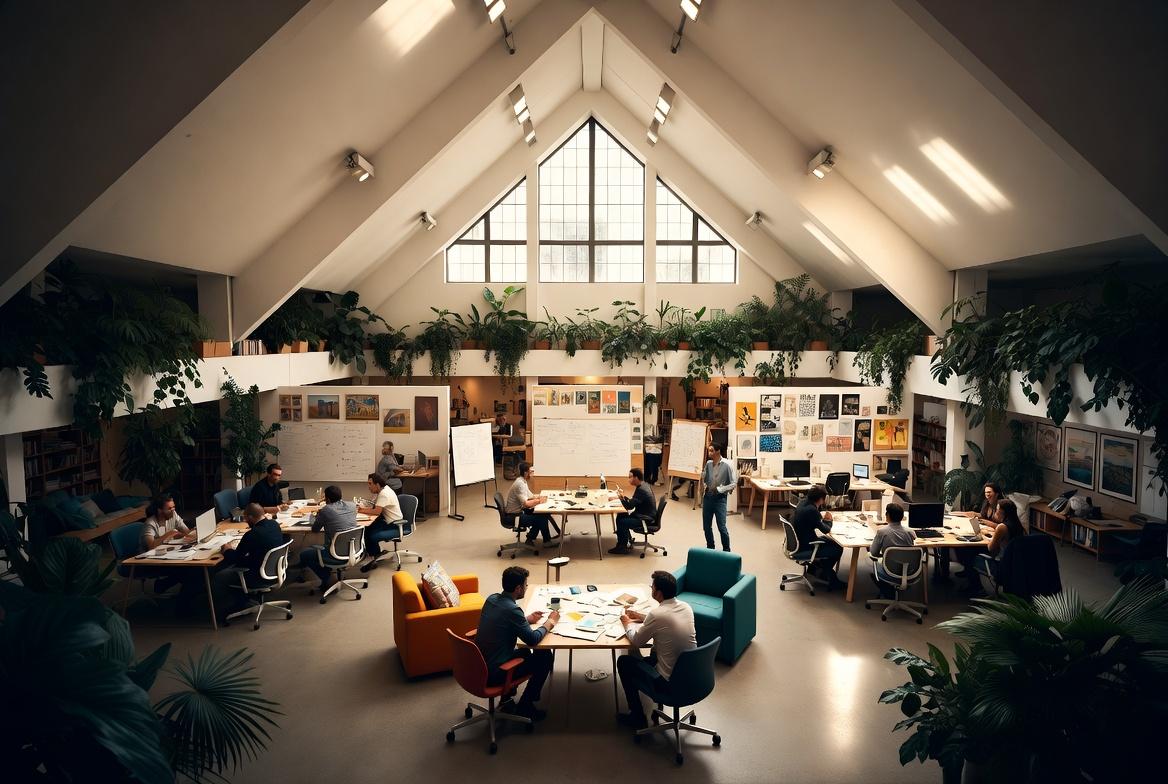
Ever notice how some workspaces just… feel different?
You walk into a room and inspiration hits. Other offices make you want to go crawl back into bed before coffee number one.
That’s not random. That’s design at work.
Your environment is affecting your brain whether you know it or not. As far as creative thought goes, your desk, the layout of the room, the light streaming in… it plays a much bigger role than most realize.
Here’s the thing:
Microdesking is one of the largest trends discussed among businesses implementing new ways of thinking without changing the entire floor plan.
Let’s dig in.
What’s inside:
- Why Physical Space Shapes Your Best Ideas
- The Science Behind Workspace and Creativity
- How Small Office Desks Are Changing the Game
- Layout Tips That Actually Boost Innovation
- Common Mistakes Businesses Keep Making
Why Physical Space Shapes Your Best Ideas
The room you work in isn’t just a room.
It’s always messaging your brain. Every wall, every angle, every piece of clutter (or lack there of) is communicating to your nervous system how you should feel and think.
Want creative ideas? You need a space that supports them.
Want focused work? Different setup entirely.
The biggest error many companies make when planning their offices is thinking of them as vessels. Desks, humans, and chairs are placed inside without much care. But the space you’re in affects your work just as much as any other factor. How you work together, concentrate, and take creative risks are impacted by your surroundings.
That’s why good office desks matter. The size. The shape. The height. They all influence what you do on top of them. Too big and your desk will feel daunting. Too small and you’ll feel cramped and restricted by tools. Finding that sweet spot is how you create a workspace that works.
And the research backs this up.
One study found that workers who were happy with their office space were 31% more productive. That’s not 31% better. That’s 31% MORE productive as a result of improving their space.
The Science Behind Workspace and Creativity
Here’s where it gets interesting…
Scientists have studied the impact of our physical environment on our thought processes for years. Here are some crazy findings.
Consider ceiling height. Big ceilings promote big-picture thinking. Low ceilings make your brain focus on details. Literally the same person could walk into two different rooms and think differently — JUST based on how high the ceiling is.
Then there’s clutter.
But that’s not the whole story. Research also suggests that clutter can have its advantages. A classic study conducted at the University of Minnesota showed that messy desks can foster creative thought and inspire innovative ideas. Neat desks promote conformity. Messy desks break the pattern.
So which one is “better”?
Neither.
It really depends on your goal. Brainstorming session? Mess around. Doing work for an important client that needs finesse? Tidy up.
The point is your environment is constantly communicating with your brain. Intentionally designing it is the game itself.
Additional studies conducted by Human Spaces reveal employees are 6% more productive and 15% more creative when they work in greener spaces. Plants. Sunlight. Wood. They’re more than amenities. They will literally increase your performance.
How Small Office Desks Are Changing the Game
Small office desks used to be seen as the budget option.
Not anymore.
Small office desks have become an intentional choice for forward-thinking companies today. They understand the benefits they provide for end users:
- More floor space for collaboration zones
- Less clutter (smaller surface = less stuff)
- Easier to rearrange when teams shift
- Encourages digital-first workflows
- Fits modern hybrid working setups perfectly
When you clear the floor space, you make room for the things that creativity happens around — couches for casual conversations, whiteboards, small-group pods, stand-up meetings. Everything that big chairs and desks take up space from.
Small office desks demand a forced healthy minimalism. You don’t have room for stacks of paper or random tech gadgets, so you only keep what you need. And that clarity of mind transfers directly to your work.
Here’s a quick reality check:
How much space on your desk do you really use everyday? Research has shown that the average person only uses 30-40% of their desk. The remaining space is clutter.
Layout Tips That Actually Boost Innovation
Ok, on to the useful stuff. Below are some moves you can make if you want to create spaces that promote creative thinking:
Mix Up Zones
Don’t just create desks and meeting rooms. Create nooks and lounges and standing spaces. Distinct activities require distinct spaces.
Bring in Natural Light
Natural light is essential. It improves mood, focus, and creativity. Place small office desks next to windows when possible.
Add Greenery
Desk-side plants are quantifiably better for you. Adding just a couple plants to a desk can change the energy of an entire room.
Keep Things Movable
Stackable chairs and rolling desks! Items that can easily be moved open up possibilities for different work modes.
Design for Quiet Too
Open plan offices are awesome for collaboration but horrible when you need to concentrate. Ensure there are areas or pods where individuals can get lost for deep work.
Common Mistakes Businesses Keep Making
A few traps to avoid:
- Too much open plan — completely open plan can destroy focus instead of promoting it
- Buying oversized desks for everyone — wastes space and encourages clutter
- Ignoring acoustics — noise is the silent productivity killer
- Forgetting about personality — sterile offices feel like hospitals
Get these wrong and even the most expensive fit-out will underperform.
Another group to consider: studies estimate that 15-20% of the workforce is neurodivergent in some way. This translates to your space needing to accommodate many ways of working.
Bringing It All Together
There’s a definite and quantifiable link between the built environment and creative thought. It’s also highly exploitable once you understand what you’re looking for.
Little tweaks — replacing heavy workstations with petite office tables, incorporating greenery, or reconsidering your layout — can completely transform your employees’ mindset. You don’t need to break the bank on a massive office remodel. You just need to be thoughtful of how each element of your space fosters desired thought processes.
To quickly recap:
- Your space shapes your thinking, like it or not
- Smaller desks free up room for collaboration
- Natural light, greenery, and flexible layouts matter
- One-size-fits-all offices are a thing of the past
- Get the basics right and innovation follows
Go look at your workspace. What message is it sending your brain these days?