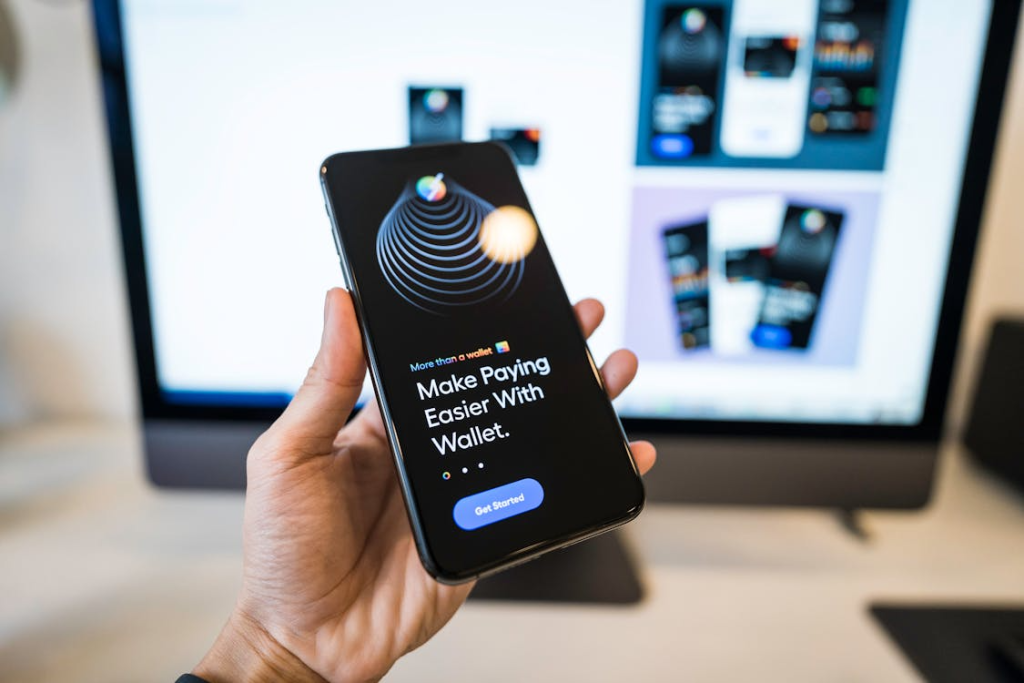
According to the Payment Markets Report 2024 produced by UK Finance, approximately 57%, or roughly 90/100, of all adult users in the UK currently employ mobile wallets (e.g., Apple Pay, Google Pay). In contrast, the card represents approximately 64% of total transaction volumes within the UK.
The transition from cash to nearly all-digital (cashless) transactions is evident in this data, with every passing year indicating a continued decline in cash usage, estimated to fall below 10% in 2024, with anticipated estimates of 4% or less for 2034.
In retail, utility bills, transport and online entertainment, the dominant expectation is for payments that are instant, invisible and secure. For agile product and technology teams, that means treating payments as a living product, not as a one-off integration that can be forgotten after launch.
At the same time, new layers are being added to this landscape. In March 2025, open banking users were responsible for about 31 million payments in a single month, roughly 8 percent of all transactions going through Faster Payments. Designing agile payment journeys now requires a careful blend of UX, technical reliability and regulatory compliance from the very first sprint.
Mapping the Current Payments Landscape
The first thing a product team should do is acknowledge that due to the constant change in payment ecosystems to non-linear formats, products now fall within many different channels with each channel comprising a variety of payment methods. Debit cards are still the most frequently used form of card and continue to dominate the total volume of transactions. However, debit cards are increasingly being used inside digital wallets which already account for a significant portion of eCommerce..
From the user’s point of view, what they see is an Apple Pay, Google Pay or PayPal button. Behind it, there is a complex chain of tokenization, strong authentication and payment routing that has to work without friction. On top of that comes open banking, which has moved beyond balance aggregation experiments and turned into a meaningful account-to-account payment rail.
The combination of 13.3 million active users and annual growth of around 40 percent shows so many people now using payment initiation via bank APIs as part of their daily lives, it’s clear that this will become an integral part of how we transact. As such, this means that as your agile team grows more successful, you’ll have to manage an expanding portfolio of rails (e.g., cards, wallets, and open banking)… likely adding options for Buy Now Pay Later and/or cryptocurrencies for various segments.
This is exactly where crypto casinos sit at the edge of the ecosystem. Operators working with crypto often compete by offering near-instant deposits and withdrawals, strong security promises and a very streamlined onboarding experience.
Market guides such as the Esports News list of crypto casinos by Matteo Farina and Darragh Harbinson help UX and risk teams see how many brands are targeting the same customer profile, which digital payment methods are already treated as minimum expectations and what level of speed and convenience is being promised in that specific niche.
When product teams map this landscape, the goal is not to copy any one sector’s behavior, but to understand which payment narrative is already in the customer’s mind. If someone can deposit in seconds in an online entertainment environment, it is natural for them to expect something very close to that when paying a bill, buying a digital service or subscribing to a platform.
From there, agile work stops being just about adding another payment method and starts treating the entire journey as a continuous flow of experiments.
Source: Pexels
What UX Research Reveals About Friction in UK Payment Journeys
Adoption numbers for wallets and open banking help set the scene, but UX research is what shows where friction really appears. In recent years, the rise in digital payments has gone hand in hand with a shift in the type of risk people feel.
As physical cash plays a smaller role, exposure grows to sophisticated scams that exploit authentication flows, fake links and social engineering. In 2024, the UK recorded a record level of remote purchase fraud, where criminals use card details and one-time passcodes to make unauthorized online purchases, with almost 2.6 million cases reported.
This reality forces teams to balance security and smoothness very carefully. From a user experience perspective, three moments tend to generate the most friction. The first is strong authentication, such as 3-D Secure challenges and OTP-based flows via SMS or banking app.
Interruptions, unclear screens or generic error messages make users feel the flow is broken, driving abandonment even when the real risk is low. The second is open banking consent. Long authorization screens, overly legalistic language and lack of clarity about who can access what raise the perceived level of risk.
The third appears in KYC and identity verification flows, especially when document and selfie uploads are not well guided or fail without useful feedback. At the same time, not all friction is bad. The Consumer Duty regime, which the FCA began applying more strictly to payments firms from 2023 onward, makes it clear that the focus should be good outcomes for customers, not just maximum conversion.
Agile teams that are committed to UX are more likely to include UX-related metrics in their operational metrics. These teams will not just look at how many different methods of payment they provide, but they will also track where customers drop off during the payment process, the average time to authorize a transaction, the percentage of failed transactions by payment method, and how changes to the user experience affect specific customer segments.
That includes younger heavy users of wallets as well as segments that still rely more on physical cards and cash. From there, each sprint stops being just a functional increment and becomes a deliberate experiment in how to reduce bad friction while preserving healthy friction.